7 tools
Cutting optimizers
Cut a list from stock with the fewest sheets or bars: panels and plywood with the grain, glass with the offcuts already standing on your rack, and bars, tubes and profiles with the saw kerf. Each one prints the plan the workshop cuts from, and none of them asks you to sign up.
Same rules as everywhere here: the method on the page, nothing uploaded, all of it computed in your browser.
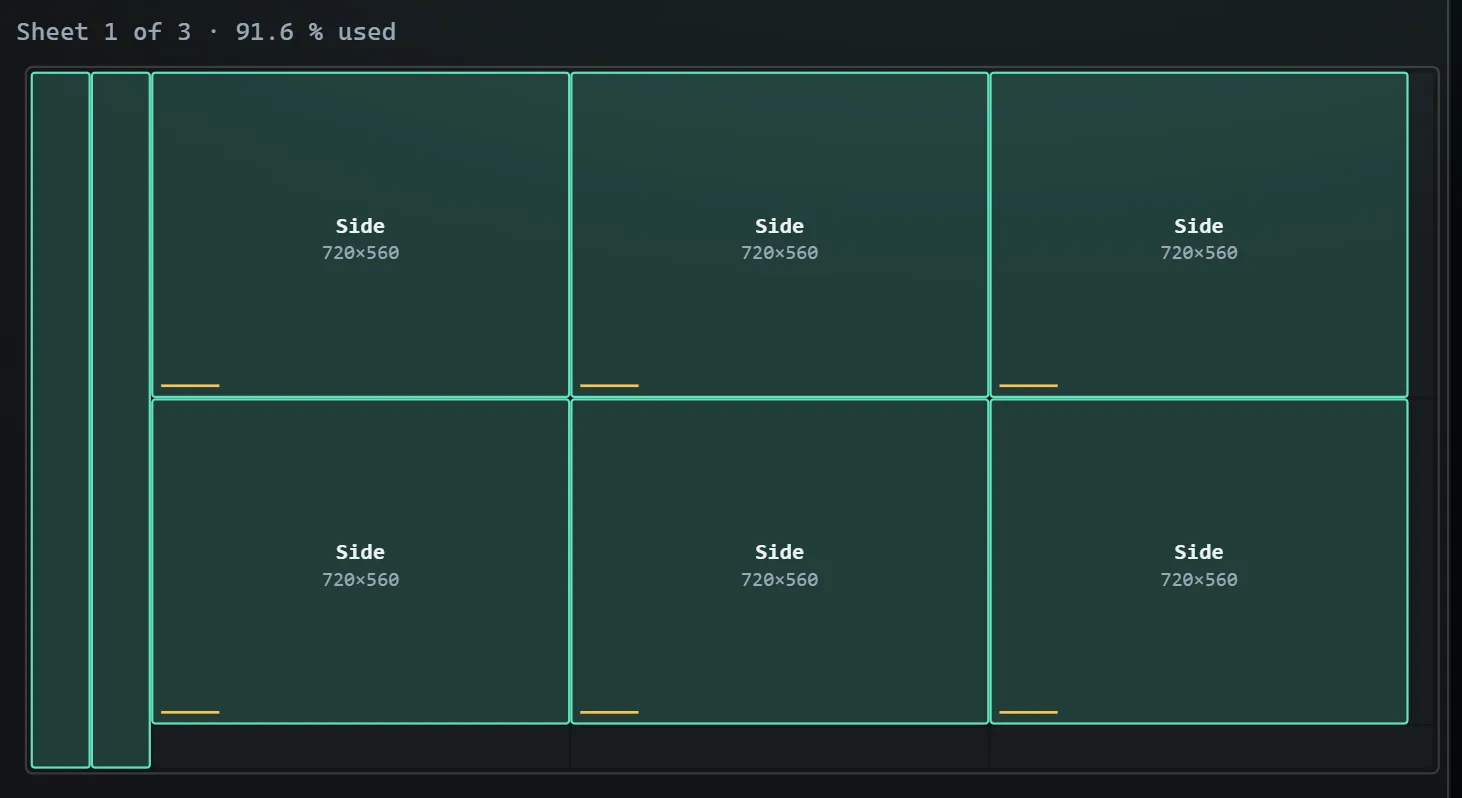
Sheets and panels
Parts on the fewest sheets of plywood, MDF or melamine, with the grain and the kerf, and the edge tape to order.
Glass
A nest with real guillotine cuts and breakout, cut from your rack before a new sheet, then the plan and a label for every pane.
Bars and profiles
Lengths from stock bars, tubes, battens or profiles with the fewest bars, the saw kerf and the end trim.
Which one to use
Rectangles from sheets go to the panel optimizer, unless the sheets are glass: glass breaks along a score, needs an edge trim and is cut on a table, which is why it has its own, with the offcut rack. Lengths from bars go to the linear optimizer, which works the same for aluminium profiles, steel tube and timber battens.
All three solve the same question, the fewest stock pieces for a list, and all three are free without limits. The labels, the 400-offcut rack and the job library are the parts that come with Pro.